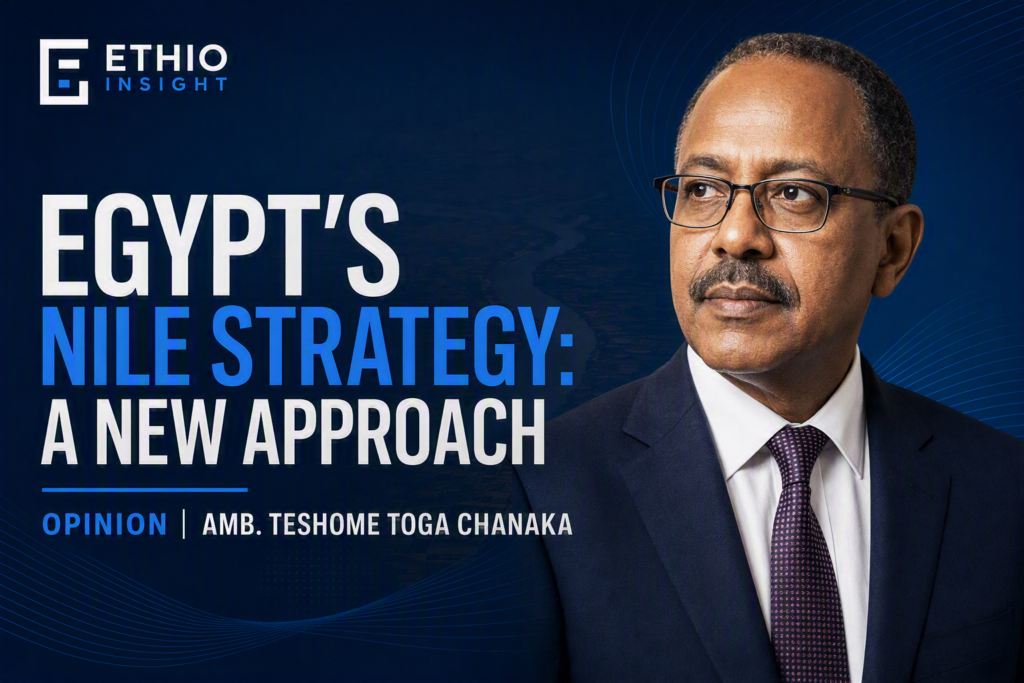
By Amb. Teshome Toga Chanaka
Source & Attribution: Originally published as an opinion analysis on Pulse of Africa, with additional analytical coverage reported via the Ethiopian News Agency (ENA).
The Nile is a shared lifeline for 11 countries, but decades of competing claims, historical agreements, and mistrust have complicated efforts to build an inclusive basin-wide framework.
As Ambassador Teshome Toga Chanaka, former Ethiopian Ambassador to Egypt, former Speaker of the House of People’s Representatives, and veteran diplomat argues in his analysis on Pulse of Africa, Egypt’s legitimate water needs must be reconciled with the equally legitimate development aspirations of upstream countries, including Ethiopia.
According to Ambassador Teshome, the Nile Basin has been fundamentally transformed by rapid population growth, climate change, rising energy demands, food insecurity, and economic development. These evolving dynamics require an updated framework based on mutual respect, sovereign equality, and equitable utilization. In his words, “the Nile must be managed according to the realities of the twenty-first century, not the logic of a bygone colonial era.”
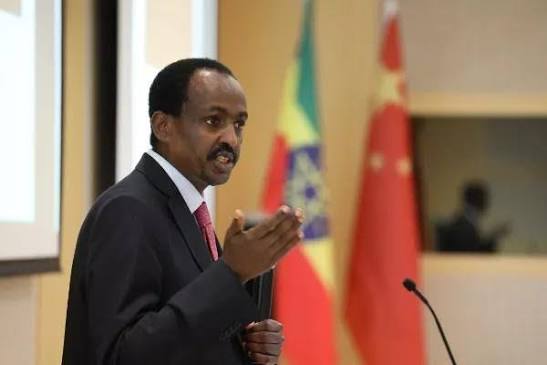
Highlighting the hydrological foundation of the river, Ambassador Teshome notes that the Blue Nile (Abbay), which originates in the Ethiopian highlands, contributes approximately 86 percent of the Nile’s annual flow. This reality underscores Ethiopia’s central role within the basin. However, as he stresses in his opinion piece, Egypt’s reliance on the Nile does not confer an exclusive monopoly over the river’s management. A shared international watercourse must be governed through fairness and mutual recognition of the rights of all riparian states.
The Ambassador directly criticizes the continued reliance on colonial-era and exclusionary arrangements such as the bilateral 1959 agreement between Egypt and Sudan which allocated the river’s waters without the involvement of upstream nations. He argues that such arrangements cannot provide a sustainable foundation for modern basin governance, as upstream countries increasingly expect their development needs and rights to be fully integrated into the governance of the Nile.
In his analysis on Pulse of Africa, Ambassador Teshome points to the Grand Ethiopian Renaissance Dam (GERD) as the clearest manifestation of this new reality. Built through self-reliance and domestic resource mobilization, the GERD demonstrates Ethiopia’s resolve to expand electricity access, reduce poverty, and accelerate economic growth.
Ambassador Teshome writes firmly that “no veto, no pressure, and no external interference can stop Ethiopia’s march toward development.” External financing restrictions, political pressure, or attempts to exercise veto power cannot stop Ethiopia’s legitimate pursuit of national development, as geopolitical friction and subversive pressure only risk deepening mistrust and delaying a long-term resolution.
Ambassador Teshome explicitly rejects military confrontation as a solution to Nile disputes, emphasizing that “military confrontation cannot resolve the Nile question; only dialogue can.” The way forward requires a shift from zero-sum competition toward technical cooperation, scientific collaboration, and broader economic integration. Regional trade in energy, cross-border investment, and infrastructure connectivity offer a viable path to turn the river into an opportunity for mutual benefit.
He recalls Ethiopia’s long-standing commitment to diplomacy, citing its active engagement in the 2015 Declaration of Principles on the GERD as an important example of peaceful engagement. While downstream countries must accept that historical monopolies are no longer viable, Ethiopia continues to show that its development can coexist with the legitimate water-security interests of lower riparian states.
The central principle for the future remains straightforward in Ambassador Teshome’s assessment: no single country should seek to monopolize a shared transboundary river, and no nation should be denied its fundamental right to development. By embracing genuine negotiations and scientific cooperation, the Nile can serve as a bridge for shared prosperity rather than a source of permanent confrontation.