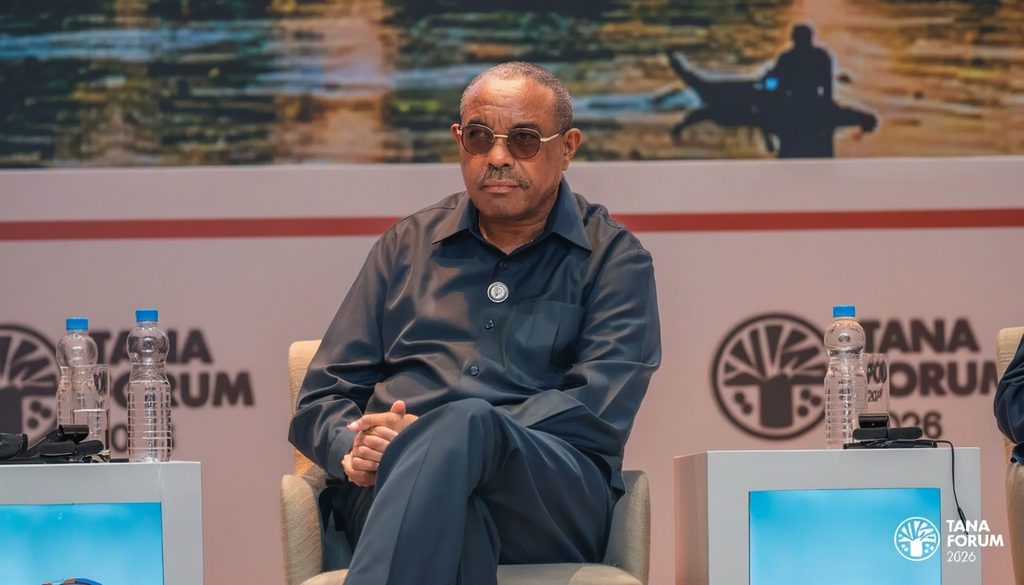
ADDIS ABABA – As geopolitical competition intensifies across the vital maritime corridors of the Bab el-Mandeb and the broader Red Sea basin, questions surrounding regional security architecture, state inclusivity, and economic sovereignty have taken center stage. In a comprehensive recent analysis, former Ethiopian Prime Minister Hailemariam Dessalegn underscored that Ethiopia’s meaningful participation in Red Sea security discussions is not merely an option, but an absolute prerequisite for lasting peace and stability in the Horn of Africa.
Speaking in an exclusive interview with Pulse of Africa, Hailemariam addressed the complex realities shaping East African geopolitics, emphasizing that sustainable security frameworks cannot be engineered by omitting the region’s demographic and strategic heavyweights. Representing a nation of over 130 million people with vital commercial and strategic stakes, Ethiopia’s exclusion from maritime and regional security frameworks creates structural vulnerabilities that threaten collective stability.
For decades, the strategic calculus of the Red Sea has been dominated by littoral states and external naval powers, frequently sidelining land-linked nations whose economic survival and security dynamics are inextricably tied to maritime commerce. Hailemariam robustly challenged this exclusionary paradigm, arguing that sustainable solutions to regional security challenges must directly incorporate the region’s primary anchor nation.
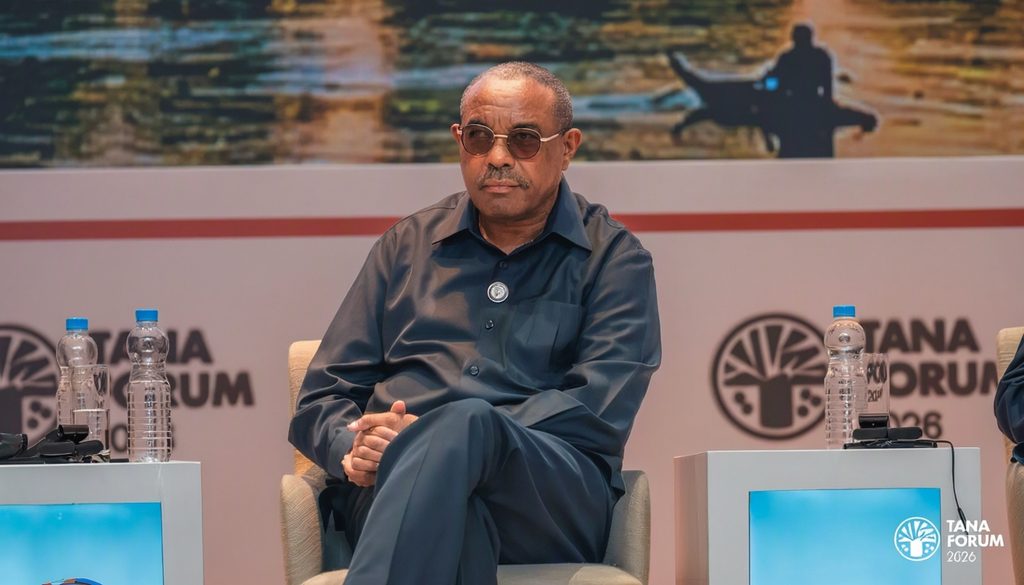
“Excluding Ethiopia from these processes would undermine efforts to establish a lasting and sustainable regional security framework,” Hailemariam noted, pointing out that regional stability is an indivisible concept.
The security architecture of the Horn of Africa cannot be insulated from the geopolitical pressures of the Red Sea, nor can maritime security be managed effectively without accounting for the landmass that anchors the hinterland. By stressing Ethiopia’s legitimate strategic interests, the former prime minister highlighted the necessity for regional partners and international actors to move away from exclusionary diplomacy toward inclusive, multilateral cooperation.
Beyond immediate security dialogues, Hailemariam’s intervention drew a direct, unyielding line between national economic sovereignty and a state’s capacity to project independent foreign policy. He urged Ethiopia and broader African nations to look inward, prioritizing homegrown development models centered on productive sectors such as agriculture, industry, and energy.
“Economic sovereignty is all about the country. Its growth depends on homegrown sources,” Hailemariam emphasized during the discussion.
This philosophy of self-reliance does not advocate for economic isolationism; rather, it warns against the dangers of excessive external dependency. In an era where global supply chain shocks, debt distress, and external geopolitical maneuvering frequently constrain developing economies, true diplomatic leverage is derived from robust domestic production. By fortifying agricultural value chains, accelerating industrialization, and scaling up energy independence, African nations can insulate themselves from external coercion and negotiate regional security arrangements from a position of structural strength.
Hailemariam’s analysis frames a dual-track necessity for Ethiopia’s strategic future. On one internal track, the nation must relentlessly pursue economic transformation through local resources and initiatives that directly improve civilian livelihoods. On the external track, it must assert its rightful place in regional dialogues that shape cross-border security, trade routes, and geopolitical alignments.
As maritime security challenges ranging from transnational trafficking to geopolitical militarization continue to mount across the Red Sea, the insights shared by regional leaders like Hailemariam serve as an urgent reminder. Lasting peace in the Horn of Africa cannot be decreed from outside, nor can it be sustained by marginalizing key stakeholders. Inclusive dialogue, grounded in economic self-reliance and mutual respect for strategic interests, remains the singular viable pathway toward a stable, sovereign, and prosperous regional future.
Exclusive interview With Former Ethiopian PM Hailemariam Desalegn, This video provides an in-depth conversation covering regional governance, Red Sea security, and economic sovereignty.