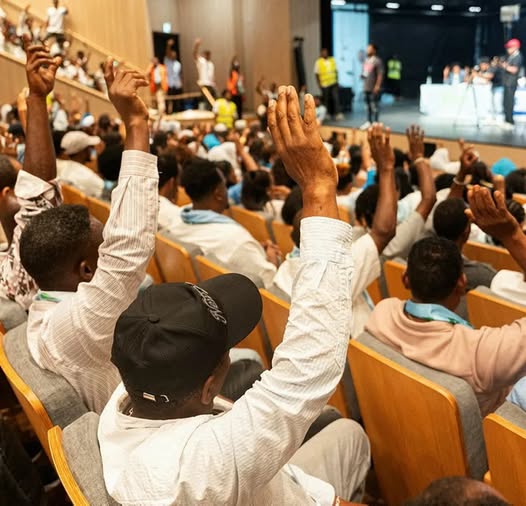
Eritrean Diaspora Movement Brigade Nhamedu Coordinates Global Opposition Front from Addis Ababa and International Hubs
ADDIS ABABA – An Eritrean diaspora movement operating across North America, Europe, the Middle East, and East Africa has launched an organized political campaign aimed at challenging President Isaias Afwerki’s long-standing government and eventually facilitating the return of exiled citizens to a democratized Eritrea.
According to a detailed report published by the Israeli newspaper Haaretz, the opposition movement Brigade Nhamedu also referred to as the Blue Revolution is actively coordinating transnational operations through diaspora communities in Sweden, Germany, Israel, the United States, and Ethiopia. Activists describe the organization as a reformed resistance force seeking to replace decades of fragmented opposition efforts with structured, modern political strategies.
The group has instituted a structured leadership framework covering diplomacy, community organizing, finance, and security affairs. Beyene Gerezgiher, identified as the movement’s overall leader, operates out of Addis Ababa, while Canadian-Eritrean businessman Dawit Teferi manages financial operations from Washington.
Movement representatives recently joined Eritrean exile communities across 17 international locations to elect a 51-member international governing council, which conducts weekly administrative meetings on funding, diplomatic outreach, and ground logistics.
Activists estimate that their operational base draws from approximately two million Eritrean refugees and asylum seekers living abroad. In Ethiopia, where deteriorating diplomatic relations between Asmara and Addis Ababa opened space for opposition activities, the group has established an official office to assist Eritrean refugees and centralize political organizing.
Leadership figures state that while they have not mobilized an armed force, they are building a unified political structure capable of stepping in when political conditions allow a return to Asmara.
Eritrea has been governed by President Isaias Afwerki since gaining independence in 1993. National elections have never been held, the 1997 constitution remains unimplemented, independent media outlets are banned, and citizens face mandatory, indefinite national service.
While international human rights monitoring bodies frequently criticize the regime for arbitrary detentions and severe restrictions on civil liberties, government authorities in Asmara consistently maintain that national service and tight political controls are necessary measures to preserve state sovereignty amid regional security threats.