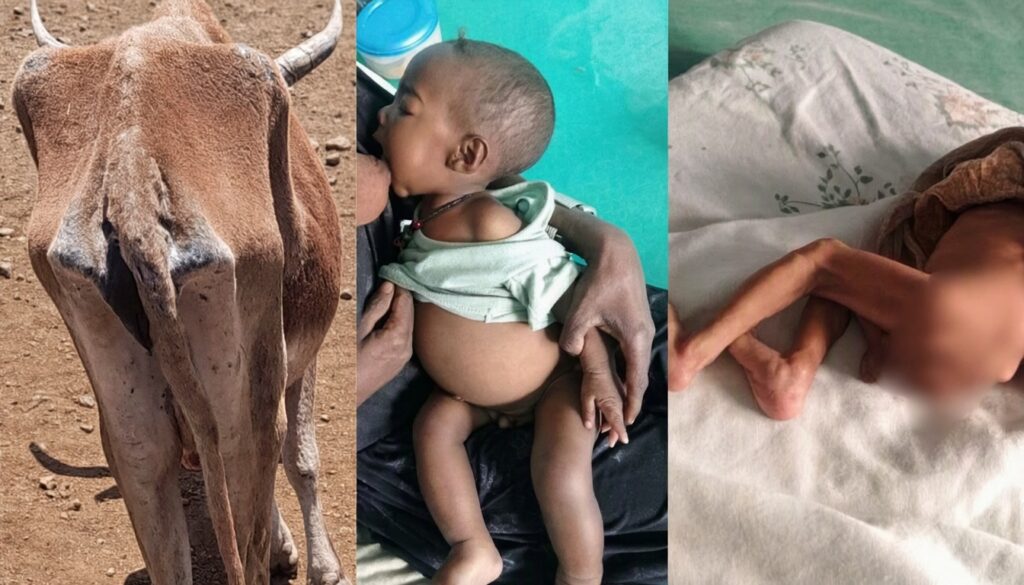
ADDIS ABABA / MEKELLE – A severe, prolonged drought compounded by active conflict and entrenched poverty has plunged communities across the Amhara and Tigray regions into a profound humanitarian crisis, leaving millions facing acute food insecurity and existential survival risks.
According to residents, researchers, and human rights sources, the crisis is hitting children, the elderly, and mothers the hardest. Development researcher and lecturer Dr. Yideg Alemu noted that the drought’s early onset in October, followed by an almost complete failure of seasonal rains yielding only three days of rainfall across critical agricultural months devastated local harvests.
In the Wag Himra Nationality Administrative Zone, particularly in districts such as Abergele, Sahala Seyemit, Ziquala, Dahana, and around Sekota, conditions are described as catastrophic. In Abergele district alone, official reports indicate that 90% of planted crops failed to mature, triggering widespread livestock feed shortages, destitution, and displacement. Compounding the climate shock, ongoing armed conflict and a complete lack of basic infrastructure have severely restricted humanitarian aid from reaching isolated pockets.
Testimonies from Sahala Seyemit portray harrowing conditions. Displaced mothers carrying starving infants report that destitution has surpassed the miseries of war, noting that the total loss of livestock and the absence of institutional support or relief organizations have left families entirely isolated. Local sources report that while suffering is acute, regional authorities have been slow to publicly document the full scale of the disaster.
In North Gondar’s Telemt Woreda, crop failures, drought, and related disease outbreaks have claimed the lives of over 40 people and killed more than 14,000 livestock across 10 kebeles, including Besgeya, Debena, and Awgeta. Local early warning coordinators confirm that over 80,000 people across the district are facing severe hardship and displacement.
Similar devastation is unfolding in Tigray, where drought in the Central Zone such as Abergele Chila and Kola Tembien woredas has destroyed thousands of hectares of arable land and decimated livestock populations. Across the Tigray region, at least 2.45 million people require urgent food assistance, while more than 900,000 internally displaced persons sheltered in sites like Shire and Endabaguna endure profound suffering.
The crisis has been exacerbated by broader El Niño climate anomalies, prompting international bodies like the Food and Agriculture Organization (FAO) to issue funding appeals. However, analysts emphasize that active conflict and security restrictions across northern Ethiopia remain the primary barrier preventing life-saving aid from reaching vulnerable populations.