MOGADISHU – As political divisions deepen inside Somalia and President Hassan Sheikh Mohamud’s administration faces a mounting crisis over its constitutional legitimacy, Mogadishu has entered a sharp diplomatic confrontation with the United Arab Emirates. The Somali federal government ordered the Emirati ambassador to leave the country within 72 hours and recalled its own envoy from Abu Dhabi for consultations, accusing the UAE of interfering in Somalia’s internal affairs, undermining central authority, stoking friction with federal member states, and forging unauthorized security arrangements.
The United Arab Emirates firmly rejected Mogadishu’s accusations, denouncing the move as unjustified, hostile, and escalatory while expressing regret at being drawn into Somalia’s internal political disputes. In a statement, the Emirati Foreign Ministry argued that Mogadishu’s actions undermine bilateral cooperation and stressed that state-to-state relations should rest on shared interests rather than domestic political calculations. Abu Dhabi also pointed out that it had already closed its embassy in Mogadishu and withdrawn its diplomatic personnel in January 2026 following what it characterized as hostile conduct, including the cancellation of bilateral agreements.
Analysts and regional commentators have increasingly questioned whether the timing of the diplomatic rupture is tied to severe political instability at home. Writing in the Times of Israel, Somali commentator Mohamed Osman argued that the dispute looks less like a principled defense of sovereignty and more like an attempt to distract from internal institutional paralysis, elite power struggles, and unresolved federal disputes.
That assessment coincides with an acute constitutional standoff in Mogadishu. Parliament previously approved sweeping constitutional amendments extending presidential and parliamentary terms from four to five years pushing the end of Mohamud’s mandate from May 2026 to 2027 while shifting Somalia from a parliamentary to a presidential system, abolishing the post of prime minister, and replacing the “4.5” clan power-sharing formula with direct elections.
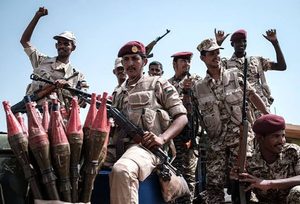
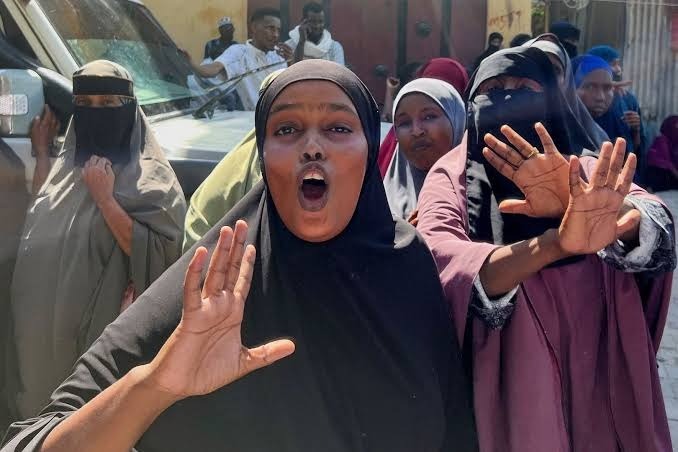
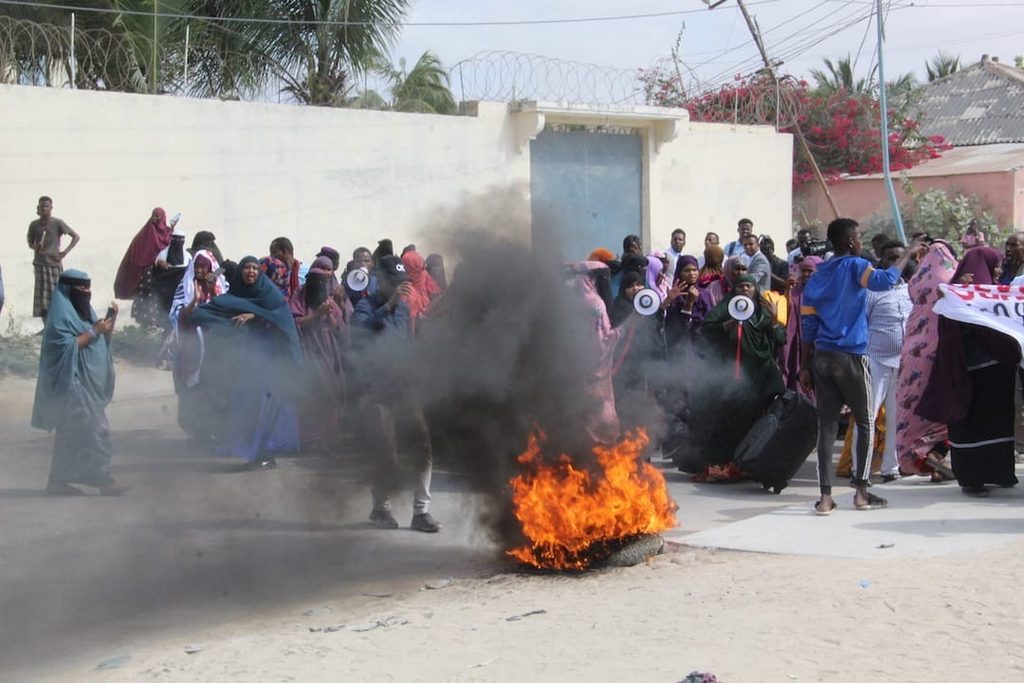
The overhaul triggered fierce opposition from Puntland, Jubaland, and former South West State leader Abdiaziz Laftagareen, who rejected both the amendments and the electoral commission’s timeline setting polls for April and May 2027. Tensions have spilled into armed clashes between government forces and opposition-aligned fighters in Mogadishu and Baidoa.
The crisis escalated further in November 2026 when Somalia’s Supreme Court ruled that the president’s mandate had expired on schedule in May 2026, refused to recognize the constitutional amendments as valid grounds for term extensions, ordered an electoral framework within 30 days and elections within 90 days, and overturned the president’s dismissal of Chief Justice Bashe Yusuf Ahmed. The government’s rejection of the ruling has deepened doubts over institutional resolution.
Beyond constitutional disputes, Mogadishu faces mounting public and international scrutiny over governance and graft. Somalia ranked 179th out of 180 countries in Transparency International’s 2024 Corruption Perceptions Index, and the U.S. State Department’s 2026 investment climate report described corruption as pervasive across government sectors. In January 2026, Washington suspended assistance following allegations denied by Somali authorities—that officials destroyed a World Food Programme warehouse and seized food aid.
Domestically, critics have highlighted allegations of nepotism including the March 2024 appointment of the president’s son-in-law, Adam Roble, to head the Development and Reconstruction Bank alongside relatives in senior security and administrative posts as well as scandals involving unauthorized individuals placed on official foreign delegations and payroll audits showing only 1,500 of over 5,000 registered civil servants reporting for work.
As relations with Abu Dhabi deteriorated, Mogadishu moved to deepen defense ties with Saudi Arabia. In February 2026, Somali Defense Minister Ahmed Moalim Fiqi and Saudi Defense Minister Prince Khalid bin Salman signed a military cooperation agreement in Riyadh focused on training and capability building. Subsequent reports pointed to a nine-month, Saudi-backed program in Somalia’s Gedo region to train over 5,000 soldiers including roughly 2,000 recruits from the northeast with foreign instructors from Romania, Ukraine, South Africa, and Colombia. The program has drawn scrutiny over unverified claims that trained personnel could be deployed to external conflicts such as Sudan, though neither Riyadh nor Mogadishu has released full operational details.
Intertwining diplomatic confrontations with the UAE and expanding defense partnerships with Saudi Arabia underscore how Somalia’s foreign policy has become inseparable from its internal power struggles. While Mogadishu insists on asserting central sovereignty against unauthorized foreign engagements by regional states, federal administrations maintain they hold constitutional latitude to pursue external partnerships. With al-Shabaab still posing a persistent security threat, allowing domestic constitutional crises to harden into regional diplomatic ruptures risks further fracturing state-building efforts across the Horn of Africa.