Ethiopia
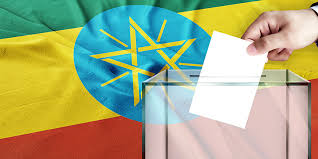
ADDIS ABABA – On June 1, 2026 ( Ginbot 24, 24, 2018 E.C ) Ethiopia will hold its seventh general election to determine the composition of the 547-seat House of Peoples’ Representatives and regional state councils across its twelve regional states and two chartered cities. According to the country’s first-past-the-post voting system, the newly elected lawmakers will subsequently form the federal government and elect the Prime Minister.
Yet, as polling day approaches, the atmosphere in Africa’s second-most populous nation is defined by a deep structural paradox. While the formal administrative machinery of voting grinds forward, the country is grappling with active ethno-nationalist insurgencies, a severely constrained civic space, and profound fragmentation. The critical question for observers is no longer who will win, but whether an election held under such volatile conditions can command broad domestic legitimacy.
At the institutional level, the National Election Board of Ethiopia (NEBE) has declared total operational readiness. In an official press briefing, NEBE Chairperson Melatwork Hailu confirmed that candidate registration, voter registration, and the cross-country distribution of ballot papers printed abroad have been finalized.
To simulate a competitive environment, the board organized 19 multi-lingual debate forums and distributed hundreds of hours of free campaign airtime across radio, television, and print media. Furthermore, NEBE has accredited over 220,000 political party representatives, 1,814 journalists, and dozens of domestic civil society observer organizations.
However, according to a media report and political analysis by The Conversation, these institutional preparations present an “illusion of procedural democracy” that masks a severely compromised political landscape. The analysis points out that while the logistics are intact, the actual conditions required to foster meaningful, democratic choice have been steadily hollowed out by persistent insecurity and state-enforced limits on opposition activity.
Incumbent Prime Minister Abiy Ahmed’s Prosperity Party enters the election as the overwhelmingly dominant force, maintaining absolute control over both federal and regional state institutions. While more than 45 opposition parties, including the Ethiopian Citizens for Social Justice (EZEMA), the National Movement of Amhara (NAMA), the Oromo Federalist Congress (OFC), and the Enat Party are contesting the ballot, their operational capacities are severely crippled.
Ethiopia’s 7th General Election: Key Details
- Polling Date: June 1, 2026
- Lower House Parliamentary Seats: 547 Seats
- Expected Outgoing Dynamic: Landslide for Prosperity Party
- Primary Systemic Impediments :
– Ongoing insurgencies in the Amhara and Oromia regions
– Total exclusion of the Tigray region and the Tigray People’s Liberation Front (TPLF)
– Widespread arrests and meeting bans imposed on opposition parties
Human rights watchdogs, including Freedom House, have extensively documented arbitrary arrests of opposition figures, the forced closure of party offices, and a pervasive climate of fear that limits political mobilization.
Furthermore, the structural exclusion of key regional actors reshapes the entire dynamic. The Tigray People’s Liberation Front (TPLF), historically the central pillar of Ethiopian politics for nearly three decades remains banned from participating by the NEBE. Consequently, holding an election in the Tigray region is highly improbable, creating a vacuum that experts warn could reignite friction between Addis Ababa and Mekelle.
The most immediate threat to the legitimacy of the June 1 vote is the fragmented security landscape. Active conflicts continue to destabilize the Amhara and Oromia regions, characterized by persistent military campaigns, drone strikes, and a breakdown of local administrative control.
According to an evaluation by the Observatory for the Protection of Human Rights Defenders (a partnership between FIDH and OMCT), independent journalists and civil society actors operate under extreme duress. The report stresses that genuine democratic processes cannot be realized when human rights defenders are systematically targeted, subjected to arbitrary detentions, and forced into exile.
With millions of internally displaced persons (IDPs) cut off from registration and vast rural swathes completely inaccessible to election workers due to insurgent activity, the structural integrity of the vote in these volatile zones is compromised.
Regional analysts and governance experts emphasize that the outcome of the election is essentially predetermined, but its long-term impact on Ethiopia’s stability remains highly volatile.
Dr. Redie Bereketeab, a senior researcher specializing in state-building and identity nationalism in the Horn of Africa, notes that because the ruling party faces no cohesive or unhindered challenger, the electoral outcome itself carries little uncertainty. “Instead, the central election issue is whether the process itself will be regarded as sufficiently inclusive and legitimate across a deeply fragmented nation,” Bereketeab states. Without cross-regional buy-in, the vote risks deepening existing ethኖ-nationalist alienation.
Political risk analysts from Bane & Stratfor echo this sentiment, suggesting that while Prime Minister Abiy Ahmed is guaranteed a comfortable landslide that allows him to advance macroeconomic reforms and pursue maritime access contracts, the domestic security cost will remain high. They warn of a higher-impact scenario where the total exclusion of the Tigray electorate, paired with ongoing kinetic operations in Amhara and Oromia, will exacerbate the country’s internal crises post-election.
In a bid to inject external credibility into the process, international and regional bodies have begun deploying observer teams. The Intergovernmental Authority on Development (IGAD) announced the arrival of its Election Observation Mission (EOM) to Ethiopia, led by former Ugandan Vice President Dr. Speciosa Wandira-Kazibwe.
While IGAD’s 26 short-term observers will monitor polling stations in Addis Ababa, Dire Dawa, and several regional states, their limited numbers and restricted mobility in conflict corridors mean their oversight will be largely symbolic. Their preliminary findings, expected on June 3, will be closely watched by international donors.
Crucially, the African Union (AU) has formally deployed its own high-level African Union Election Observation Mission (AUEOM) at the official invitation of the Ethiopian government. Arriving days ahead of the June 1 ballot, the AU mission is being led by former Kenyan President Uhuru Kenyatta.
The delegation consists of 73 Short-Term Observers (STOs) drawn from 37 African countries 61 percent of whom are women encompassing civil society representatives, legal experts, diplomats, and human rights specialists. Operating out of their secretariat at the Ethiopian Skylight Hotel, Kenyatta’s team is tasked with monitoring election-day procedures, including the opening of polls, voting, and the subsequent tabulation of votes across various accessible regions of the country.
While both the AU and IGAD teams plan to release their preliminary findings at press conferences in Addis Ababa on June 3, 2026, analysts remain highly skeptical of their actual reach. Given their limited numbers and severe operational restrictions in conflict corridors like Amhara and Oromia, their oversight will be largely confined to secure administrative centers, rendering their evaluation of the broader national environment symbolic at best.
Ultimately, the 7th General Election reflects an Ethiopia that is masterfully preserving the institutional shell of procedural democracy while steadily draining it of substantive democratic meaning. As voters head to the polls, the true test for the Prosperity Party administration will not be securing victory at the ballot box, but managing the immense governance deficits and security fractures that will remain long after the ink has dried.