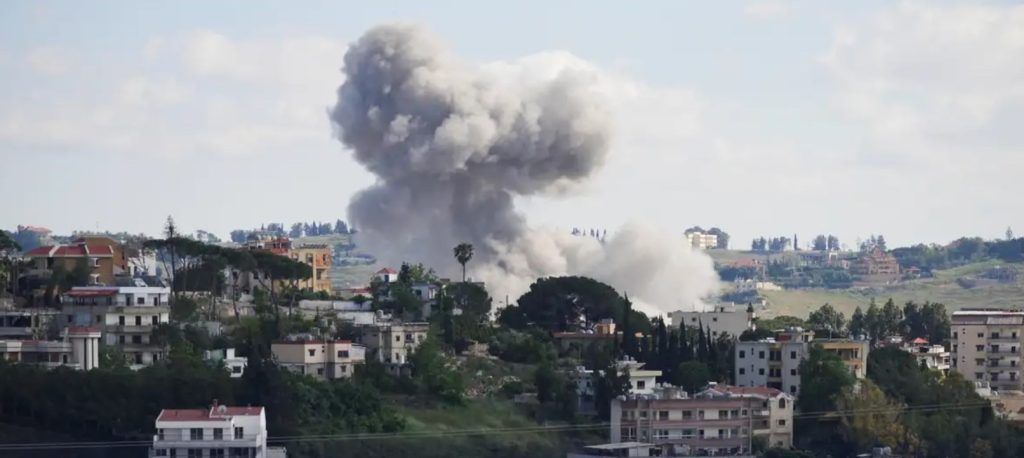
Military Escalation In Lebanon Triggers Multi Front Diplomatic Crisis
Nairobi – Seven months after a fragile international truce was established to halt the devastating conflict that erupted on October 7, 2023, the Middle East is sliding back into total war. What began as a delicate containment strategy has evolved into a multi-front diplomatic and military crisis, as expanded Israeli military incursions into southern Lebanon have shattered the regional ceasefire framework and triggered a dangerous geopolitical stand-off involving the United States and Iran.
While the October 2025 ceasefire initially brought a tense lull to major hostilities, recent weeks have seen a dramatic escalation. The focal point of the crisis has shifted to the Israel-Lebanon border, where the Israeli military has launched an expanded ground incursion into southern Lebanon.
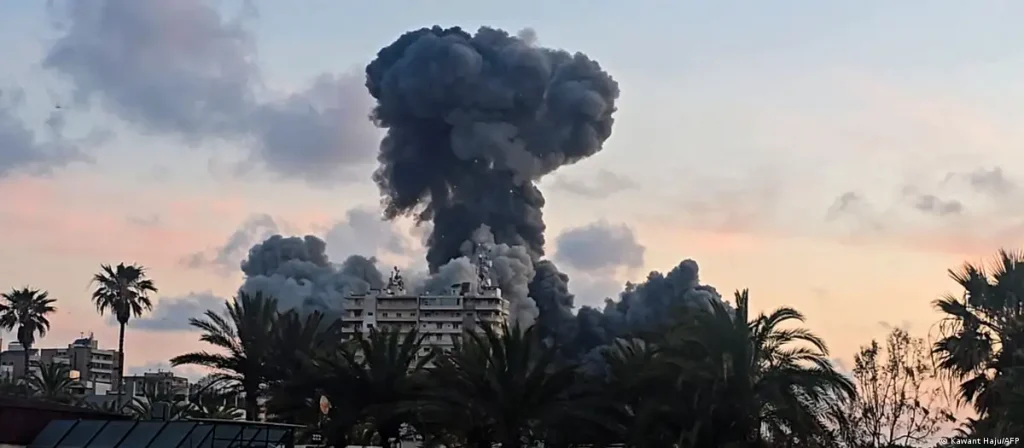
The military campaign has resulted in immense humanitarian upheaval, occupying vast swathes of land and displacing over one million Lebanese citizens. In tandem with the northern front, Israel has systematically stepped up airstrikes within the Gaza Strip targeting what it states are resilient cells of Hamas militants further fracturing the conditions of the seven-month-old truce.
[CEASEFIRE IN TATTERS]
│
┌──────────────────────────┴──────────────────────────┐
▼ ▼
[Northern Front: Lebanon] [Southern Front: Gaza]
• Massive ground incursion • Resurgence of heavy airstrikes
• 1 Million+ civilians displaced • “Yellow Line” military controls
• Projectiles cross border • Severe humanitarian aid blockade
At the United Nations Security Council, global powers with the notable exception of the United States have issued a unified demand for Israel to immediately withdraw its armed forces from southern Lebanon and refrain from further escalatory campaigns.
The regional blowback from the military escalation was swift. Citing the ongoing campaigns in Lebanon and Gaza, Iranian state media confirmed that Tehran has officially halted indirect peace negotiations with the United States. The Iranian negotiating team declared that regional stability in Lebanon was a non-negotiable precondition for maintaining the broader diplomatic framework.
The freezing of these channels threatens to derail a tentative 60-day ceasefire extension and security framework that Washington and Tehran were reportedly on the verge of finalizing last week. Observers fear that the collapse of these talks, coupled with the lingering fallout from joint US-Israeli strikes on Iran earlier this year and Tehran’s subsequent retaliatory strikes, risks plunging the entire Horn of Africa-adjacent theater into protracted, systemic instability.
The fast-moving crisis has forced direct intervention from Washington, exposing deep strategic rifts between the U.S. President Donald Trump and Israeli Prime Minister Benjamin Netanyahu. Behind closed doors, U.S. officials revealed that Trump harshly rebuked Netanyahu over the scale of the Lebanese operations, warning that the global political blowback was isolating both Israel and the United States.
Publicly, Trump attempted to project a breakthrough, asserting via social media that he had engaged with Netanyahu and, through intermediaries, secured a non-aggression pledge from Hezbollah leaders.
However, the ground reality remains highly volatile:
- Netanyahu’s Defiance: Instantly tempering Washington’s optimism, Prime Minister Netanyahu stated that Israel would continue its aggressive military operations in southern Lebanon, warning that “if Hezbollah doesn’t cease its attacks, Israel will strike terror targets in Beirut.”
- The Partial Accord: In a bid to protect urban populations, Lebanon’s embassy in Washington announced a highly tenuous, limited agreement. The framework dictates that Israel will refrain from airstrikes on the capital city of Beirut, while Hezbollah halts projectile launches into Israeli territory.
- Ongoing Violations: Despite the partial pact, hostilities have not ceased. The Israeli military confirmed it intercepted multiple projectiles crossing from Lebanon into northern Israel just hours after the announcement, while active combat continues along the southern Lebanese border.
For investigative journalists and critical discourse analysts looking at global conflict management, the current state of Israel’s borders reveals a catastrophic failure of international enforcement mechanism protocols.
In Gaza, despite the nominal existence of a ceasefire, the civilian population lives under an architectural system of absolute control. Families residing near the Israeli-controlled “Yellow Line” report heavy tank fire and constant displacement, with many families uprooted more than a dozen times.
Compounding the crisis is a systematic administrative clampdown on humanitarian monitoring. Since January 1, 2026, Israeli authorities have barred international staff and medical supplies from organizations like Doctors Without Borders (MSF) from entering the Gaza Strip.
This was followed by a strict March 1 deadline that effectively forced unregistered international non-governmental organizations out of the territory entirely, leaving a heavily compromised local apparatus to manage immense trauma rehabilitation and systemic health emergencies.
As June 2026 begins, the Middle East sits on a knife-edge. The conflict has outgrown its localized boundaries, transforming into a volatile test of wills between Washington’s pressure tactics, Netanyahu’s domestic political survival, and Iran’s regional alignment.
For international observers, the lesson of the last seven months is stark: without a comprehensive political settlement that addresses the core territorial and humanitarian grievances of both Palestine and Lebanon, any internationally brokered ceasefire is merely a prelude to a more destructive phase of war.