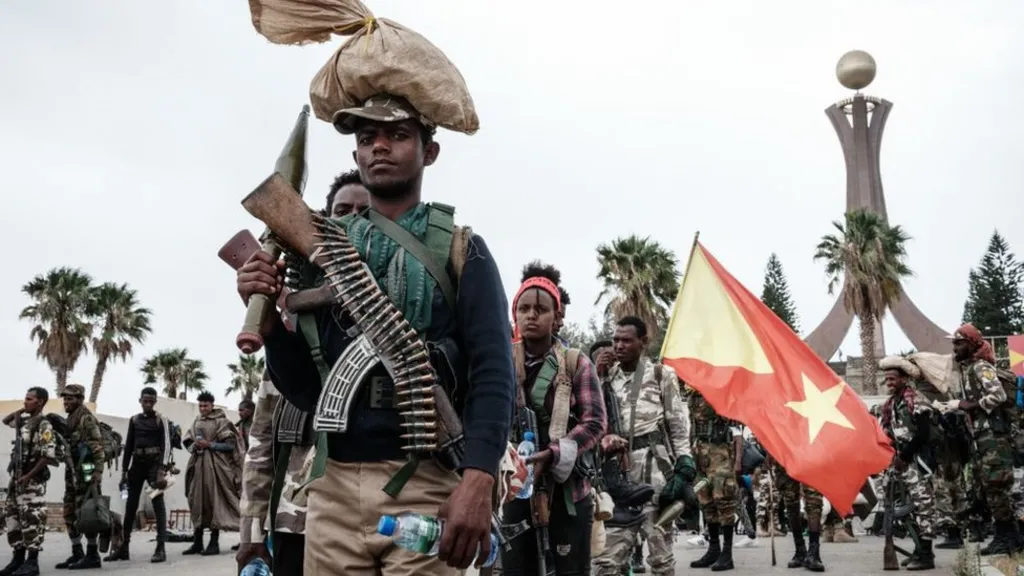
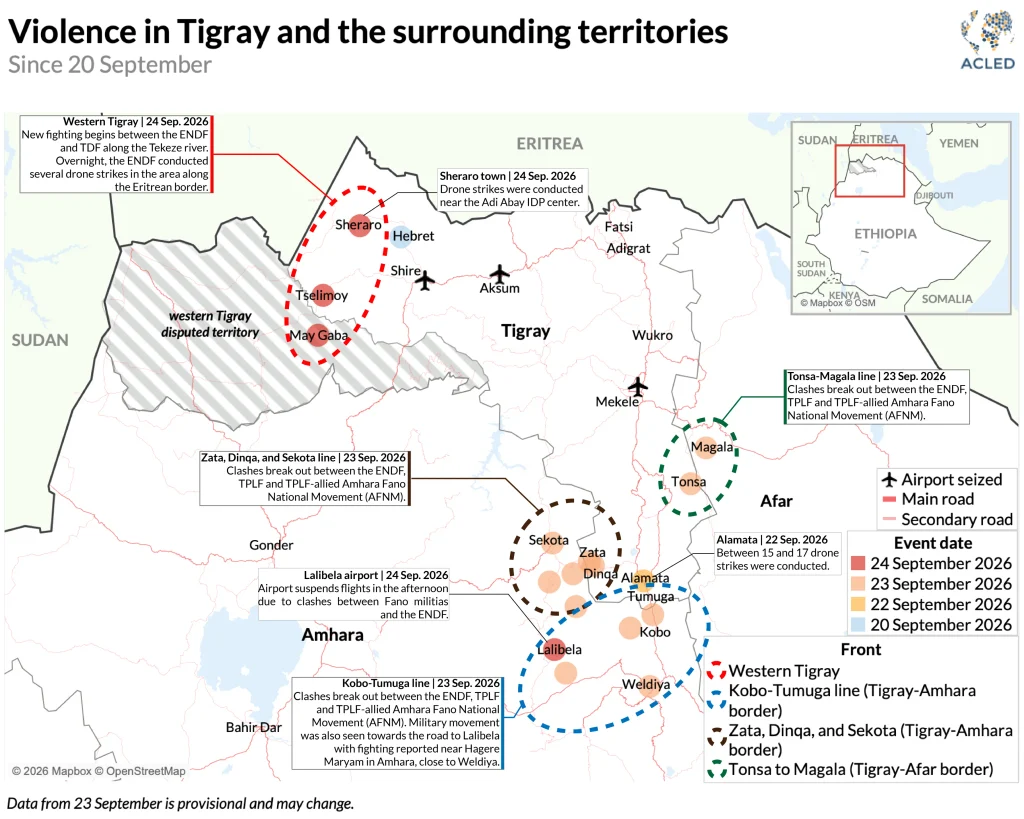
A sudden and severe escalation in armed conflict across northern Ethiopia has triggered widespread security alerts across the Horn of Africa, marked by shifting battlefield dynamics and high-stakes regional realignments. In an emergency evaluation released by the Armed Conflict Location & Event Data Project (ACLED), senior experts warned that the localized resurgence in fighting is rapidly evolving into a complex multi-nation proxy confrontation.
According to analysis featured on ACLED’s emergency podcast Conflicts of Interest hosted by CEO Clionadh Raleigh and Bron Mills, alongside Senior Analyst Dr. Jalale Getachew Birru two critical geopolitical developments now define the deteriorating situation in northern Ethiopia:
- The Tactical Alignment Between the TPLF and Eritrea:
ACLED analysts highlighted that the Tigray People’s Liberation Front (TPLF) has entered into an operational alignment with its former adversary, Eritrea. This unexpected alliance has raised immediate international alarms regarding unregulated arms flows, cross-border military logistics, and potential structural supply lines across northern transit corridors.
- The broader Red Sea Power Contest:
The renewed hostilities in Ethiopia are unfolding against the backdrop of a larger, highly militarized struggle for control over the Red Sea maritime corridor. Regional powers including Eritrea, Ethiopia, Somalia, Yemen, and Saudi Arabia are engaged in a competitive contest for influence, security guarantees, and naval access along this vital trade bottleneck.
The sudden surge in combat activities marks a dramatic departure from post-Pretoria stability, threatening to draw neighboring states into an expanded regional theatre of war. Conflict monitors emphasize that as local combatants align with external state actors to secure strategic leverage, the Horn of Africa risks compounding its ongoing humanitarian and security crises.