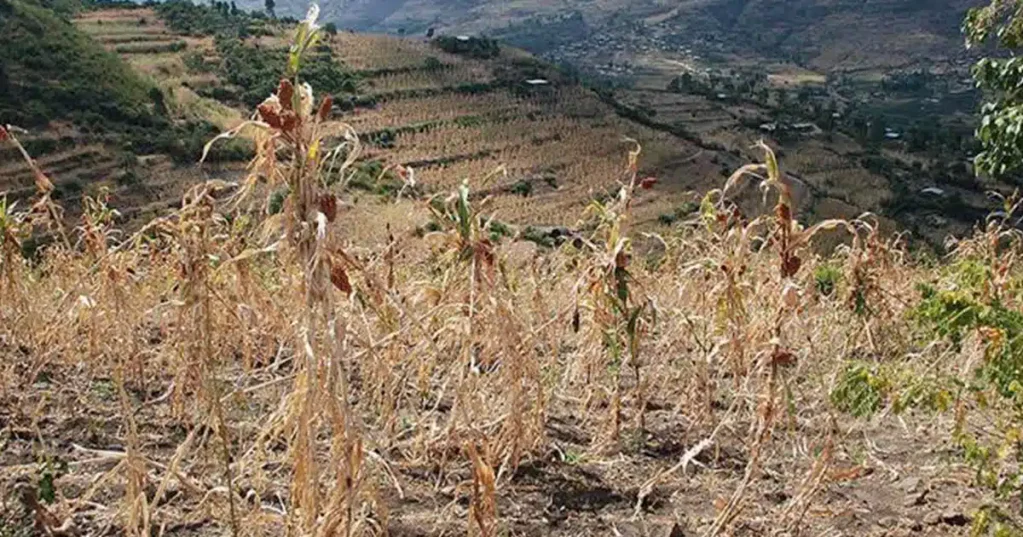
ADDIS ABABA – Historically poor rainfall linked to El Niño is severely threatening Ethiopia’s main harvest season, known as the Meher, which accounts for over 85 percent of national crop production.
According to the latest Food Security Outlook Update from the Famine Early Warning Systems Network (FEWS NET), the June-to-September Kiremt rainy season has been among the poorest on record. Exceptional drought conditions have been reported across nearly all Kiremt-receiving areas, with rainfall deficits exceeding 50 percent of average across much of the country.
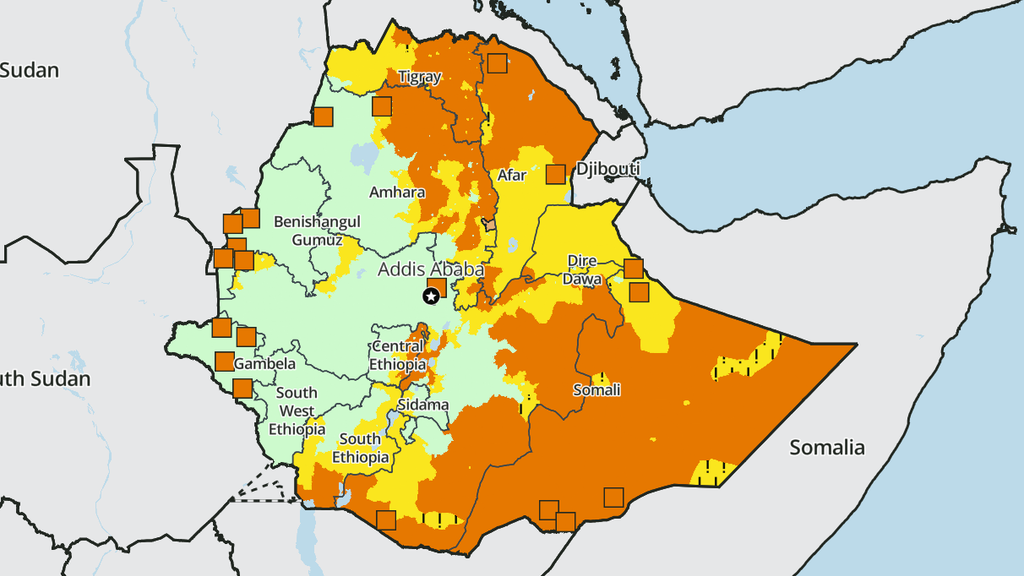
The severe rainfall shortfalls delayed planting and severely hindered crop development, particularly across northern, central, and eastern regions of Ethiopia. In areas along the Tekeze River basin, eastern Tigray, and the lowland zones of East and West Hararghe, many farming communities were forced to replant multiple times due to poor crop establishment.
Despite these efforts, vast tracts of staple crops remain severely stunted or face outright failure:
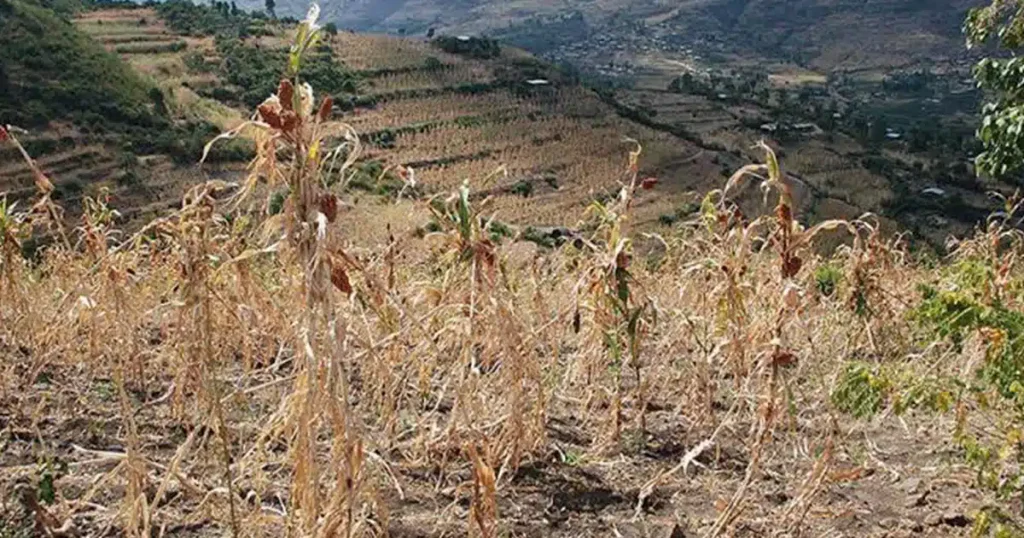
- Crop Distress: In key agricultural zones, maize is wilting rapidly and sorghum remains severely stunted, with analysts warning that crops are unlikely to recover before the end of the growing period.
- Labor Income Decline: Agricultural wage labor, a major income stream for vulnerable rural households, has dropped sharply due to reduced field activity.
- Pastoral Strain: In northeastern pastoral areas like Afar, pasture conditions remain extremely sparse during a period when grazing lands should typically be lush and green, worsening livestock body conditions.
The agricultural shock unfolding in Ethiopia threatens to destabilize trade dynamics and food supply chains across the broader Horn of Africa:
- Cross-Border Grain Deficits: Below-average national crop yields in Ethiopia are expected to reduce grain availability across regional trade corridors, driving up food prices in import-dependent neighboring countries including Djibouti, Somalia, and South Sudan.
- Displaced Pastoral Communities: Severe water and pasture shortages in eastern Ethiopia are driving early, erratic cross-border movements of pastoralists seeking grazing land, increasing pressure on fragile border ecosystems.
- The Drought-to-Deluge Risk: While northern and eastern zones face severe drought, climate models indicate that the strengthening El Niño pattern could bring heavy, above-average rains to southern and southeastern pastoral areas later in the season. This creates a sharp transition from prolonged dry spells to potential flash flooding and localized displacement.
As local food availability drops, poor households across Ethiopia and surrounding areas face expanding food insecurity, with Crisis (IPC Phase 3) outcomes expected to persist through early 2027 in the worst-affected lowlands.
Humanitarian institutions and regional governments face an urgent need for coordinated emergency interventions, input support, and regional market stabilization to prevent a deepening humanitarian crisis across East Africa.