The 2018 Precedent Re Examining Hailemariams Voluntary Exit In An Era Of Renewed Political Fractures
From Resignation to Reflection: Hailemariam Desalegn at 61 and the Unfinished Quest for Political Space
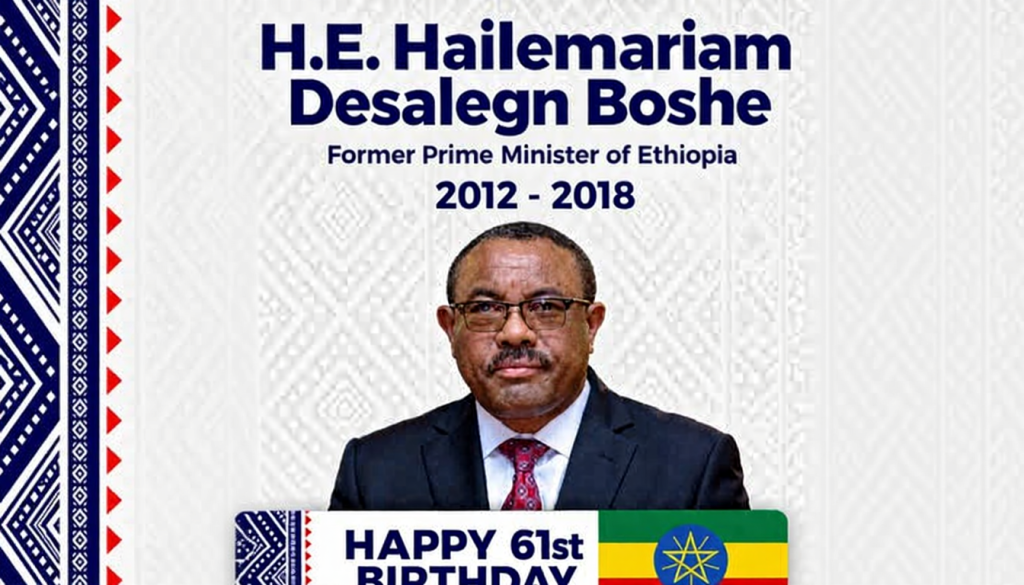
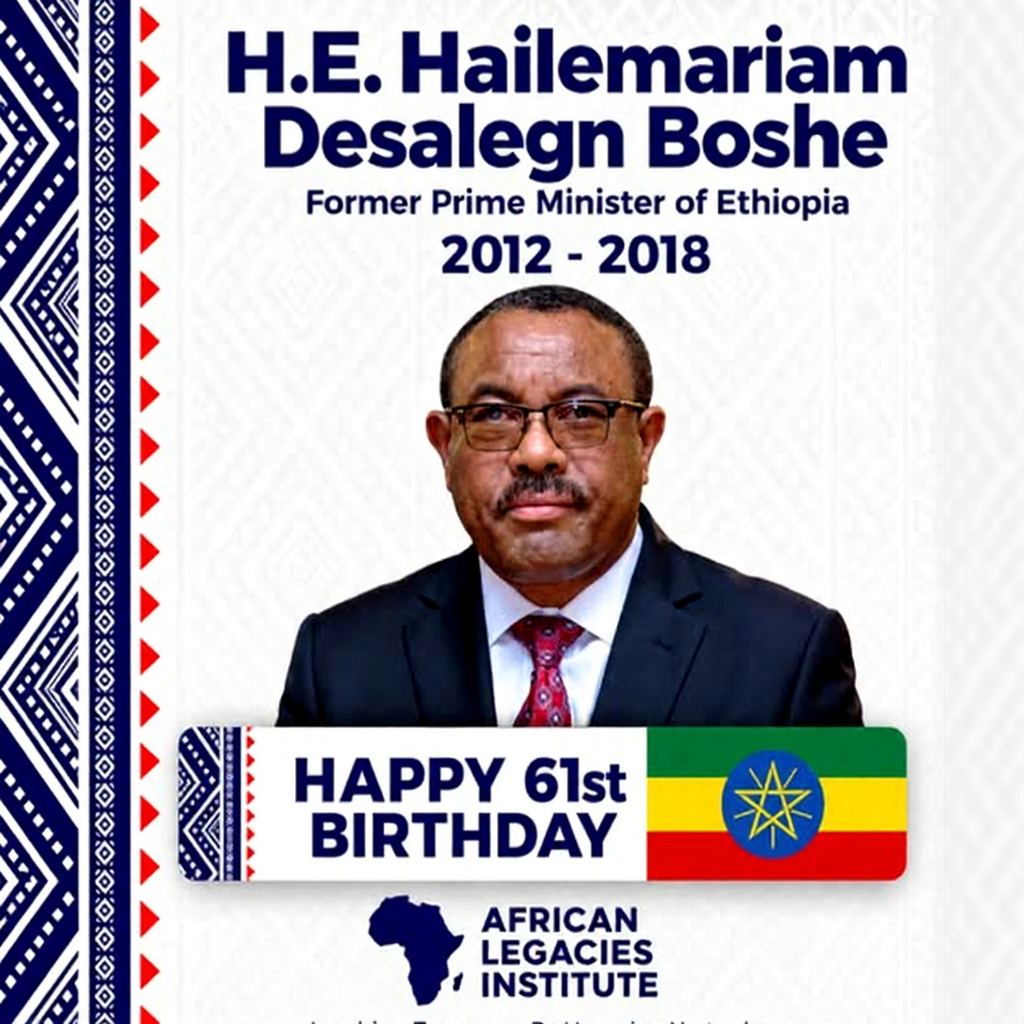
ADDIS ABABA – The celebration of former Prime Minister Hailemariam Desalegn’s 61st birthday by the African Legacies Institute has quietly turned a spotlight back onto one of the most pivotal, yet fiercely debated, chapters in modern Ethiopian political history.
For an independent media platform like Ethio Insight, looking at Hailemariam’s legacy at 61 requires peering past standard birthday well-wishes. It demands an examination of the structural contradictions of his 2012–2018 tenure, the historic precedent of his departure, and how his post-premiership work contrasts with the turbulent realities facing Ethiopia today.
Hailemariam assumed office in 2012 under the most daunting of circumstances: succeeding the towering, highly centralized figure of Meles Zenawi. Legally and structurally, Hailemariam guided Ethiopia through an era of breakneck macroeconomic growth, mega-infrastructure projects, and expanding industrial parks. Under his watch, the country consistently recorded some of the highest GDP growth rates on the continent.
Yet, from an analytical perspective, his administration was defined by a severe structural paradox. While trying to project continuity and regional stability, the ruling Ethiopian People’s Revolutionary Democratic Front (EPRDF) coalition faced unprecedented, existential domestic pressure. Massive, widespread protests sweeping through the Oromia and Amhara regions exposed deep-seated public anger over land displacement, political marginalization, and the lack of genuine democratic pluralism. Hailemariam’s tenure became an exhausting balancing act between hardline security elements within the party coalition and the escalating demands of a restless populace.
If Hailemariam’s time in office was characterized by systemic pressure, his exit in February 2018 carved out a unique place for him in African governance. His voluntary resignation explicitly stated as a move to create political space for reform marked a radical departure from the Horn of Africa’s typical political script, where transitions of power are historically dictated by conflict, illness, or death.
Looking back from the vantage point of 2026, that 2018 moment carries a heavy, bittersweet weight. The “political space” his exit aimed to foster remains deeply contested. With Ethiopia currently navigating a highly complex National Dialogue in Addis Ababa to address foundational constitutional and federal questions, the structural fractures Hailemariam sought to defuse by stepping down are still very much active. His resignation proved that an individual leader could yield power for the sake of peace, but it also underscored that structural institutional reform requires far more than a change at the top.
Since leaving the Prime Minister’s office, Hailemariam has notably avoided the internal partisan crossfire that has consumed many of his contemporaries. Instead, he has quietly institutionalized his post-government life, establishing a blueprint for how former African heads of state can maintain institutional memory without interfering in active governance.
Through his leadership at AGRA (Alliance for a Green Revolution in Africa) and the Hailemariam & Roman Foundation, he has focused heavily on human-centric, non-partisan security: food sustainability, maternal health, and climate resilience. Furthermore, his roles within the International Crisis Group and the Brenthurst Foundation allow him to offer quiet, back-channel diplomatic wisdom to a continent currently plagued by regional fragmentation, including the tightening maritime alignments across the Red Sea.
Ultimately, Hailemariam Desalegn at 61 embodies the complex reality of a transitional figure. He was a leader caught between the rigid structures of a highly disciplined revolutionary front and the unstoppable tide of popular demands for reform.
While historians will continue to debate the internal security policies enacted during his premiership, his post-office dedication to sustainable development and his historic decision to step aside out of national interest offer enduring, crucial lessons for a country and a continent still searching for stable, peaceful mechanisms of political evolution.