Egypt Signals Support For Ethiopias Red Sea Access If Nile Dispute Eases
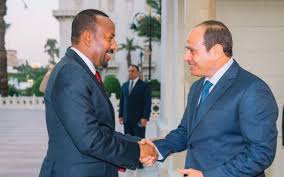
Egypt has reportedly offered to work with African partners to secure Ethiopia access to the Red Sea; if Addis Abeba demonstrates flexibility in the long-running dispute over Nile waters, according to sources cited by The National.
The proposal, conveyed last week to Prime Minister Abiy Ahmed, has also reached Washington, where US President Donald Trump has expressed interest in mediating the decade-old conflict over Ethiopia’s Grand Ethiopian Renaissance Dam (GERD).
The massive hydroelectric project has been a point of contention, with Cairo describing it as an “existential threat” to its water security, while Addis Abeba insists the dam is critical for national development and electricity generation.
According to the report, Egypt’s offer carries an implicit warning: should Ethiopia reject the proposal, Cairo could leverage its political and military influence in Sudan, Somalia, and Djibouti, as well as its naval presence in the southern Red Sea, to restrict Ethiopia’s access to regional ports.
There was no immediate official response from either Addis Abeba or Cairo regarding the reported offer.
Speaking at a joint press conference with Turkish President Recep Tayyip Erdoğan, Prime Minister Abiy underscored Ethiopia’s need for sea access. “The sustainability of our growth cannot be ensured if a nation of over 130 million continues to be denied access to the sea and remains a geographic prisoner,” Abiy said, highlighting ongoing discussions with friendly nations on supporting Ethiopia’s maritime ambitions.
The proposal comes as relations between Cairo and Ankara improve, with the two countries aligning on several regional issues, including support for Sudan’s armed forces in the fight against the paramilitary Rapid Support Forces and reconciling differences over Libya.
Both also maintain close ties with Somalia, which has been at odds with Ethiopia over maritime access arrangements.
The National’s report links the proposal to Egypt’s broader Red Sea strategy. Cairo has reportedly reached understandings to develop ports in Djibouti and Eritrea, including Doraleh and Assab, near the strategic Bab al-Mandeb Strait, while also planning joint development of Sudan’s Port Sudan.
Ethiopia, landlocked since Eritrea’s independence in 1993, depends heavily on Djibouti for the bulk of its trade.
Egypt consistently argues that the Red Sea should be controlled by its littoral states and has opposed permanent military presence by non-coastal countries.
In line with Somalia and Turkey, Cairo has objected to a 2024 memorandum between Ethiopia and Somaliland granting Addis Abeba access to a 20-kilometre coastline potentially for naval use.
As tensions simmer over Nile waters and maritime access, Ethiopia faces a critical decision: cooperate with Cairo’s overture and gain a foothold on the Red Sea, or risk political and economic pressure from its northern neighbor and the region’s maritime powers.





21 thoughts on “Egypt Proposes “Water for Ports” Deal to Ethiopia Amid Rising Regional Tensions”
Comments are closed.