Global Refugee Numbers Fall Slightly As UN Calls For End To Long Term Aid Dependence
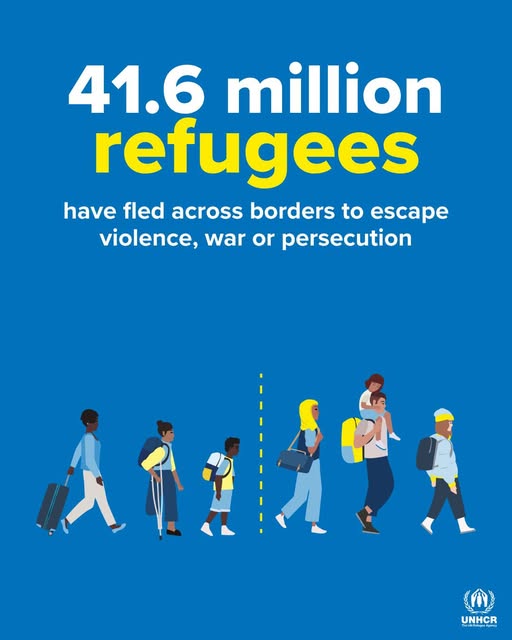
GENEVA – The number of forcibly displaced people worldwide has decreased for the first time in a decade. UN High Commissioner for Refugees Barham Salih launched the agency’s flagship Global Trends Report on June 11, 2026, in Geneva. The data shows that the global total of forcibly displaced people fell to 117.8 million individuals by the end of 2025. This figure represents a decline of 5.4 million people compared to the previous year. Within this total, global refugee numbers decreased by 3 percent to settle at 41.6 million people.
The overall decline was driven largely by an acceleration in people returning to their areas or countries of origin. The report states that 14.7 million displaced individuals returned home over the course of the year. This total includes 4.4 million refugees and 10.3 million internally displaced persons. The sharpest increases in returns were recorded in Afghanistan, Sudan, and Syria. The rate of refugee returns marked the second highest level since record-keeping began 60 years ago. However, UNHCR cautioned that many of these returns occurred under intense pressure and into precarious, highly volatile conditions.
Despite the marginal reduction in total numbers, the UN refugee agency warns that a massive humanitarian crisis persists. Seven in ten refugees amounting to 70 percent of the global refugee population remain trapped in protracted long-term displacement. Millions of these individuals live well below the poverty line and remain entirely dependent on basic humanitarian aid. The vast majority of the displaced population originates from just six countries. These nations are Afghanistan, South Sudan, Sudan, Syria, Ukraine, and Venezuela. Furthermore, low- and middle-income nations continue to bear the disproportionate responsibility of hosting, with Colombia, Germany, and Türkiye serving as the top three host countries.
In response to the data, High Commissioner Salih called for a major paradigm shift to lift millions out of aid reliance. He outlined a concrete initiative to cut the number of refugees in long-term displacement who rely on humanitarian assistance by more than half over the next decade. The strategy emphasizes transitioning refugees from traditional aid dependency toward socioeconomic self-reliance.
This approach requires expanding voluntary returns, increasing relocation paths, and securing international visas. The plan also urges host nations to include refugees within national education systems, healthcare structures, financial services, and local labor markets.
Achieving these goals faces massive structural hurdles as third-country solutions continue to collapse. The UNHCR report flagged a severe drop in international resettlement opportunities. Arrivals through resettlement or sponsorship pathways fell by more than half year-on-year to just 81,800 people. This decline has significantly widened the gap between global protection needs and available places.
Concurrently, the global asylum backlog grew for its ninth consecutive year, leaving 9 million people waiting for a decision on their future status. Salih emphasized that while asylum rights are life-saving and non-negotiable, the international community cannot accept a future where millions remain permanently trapped without realistic prospects of rebuilding their lives.
Source Link: To review the statistical metrics, regional breakdowns, and strategic targets, read the official press release directly on the UNHCR Press Portal.